Science in the First Person
At Colegio Internacional de Granada, scientific learning is experienced in a practical and close manner. After finishing the Immunology unit, the students moved the theory to the laboratory to observe blood cells closely. This type of experience reflects the educational approach of a bilingual school in Granada, where experimentation becomes a fundamental tool for better understanding the content covered in the classroom.
From the Classroom to the Laboratory
After working on the theoretical concepts related to immunology, the students had the opportunity to apply that knowledge in a laboratory practice. In an institute in Granada, connecting theory with direct experience reinforces learning and awakens a greater interest in science.
Work with Blood Samples
During the practice, the students worked from a small blood sample, using procedures typical of a scientific laboratory. These types of activities allow students to familiarize themselves with basic techniques related to cell observation and analysis within a bilingual institute in Granada.
Preparation of a Blood Smear
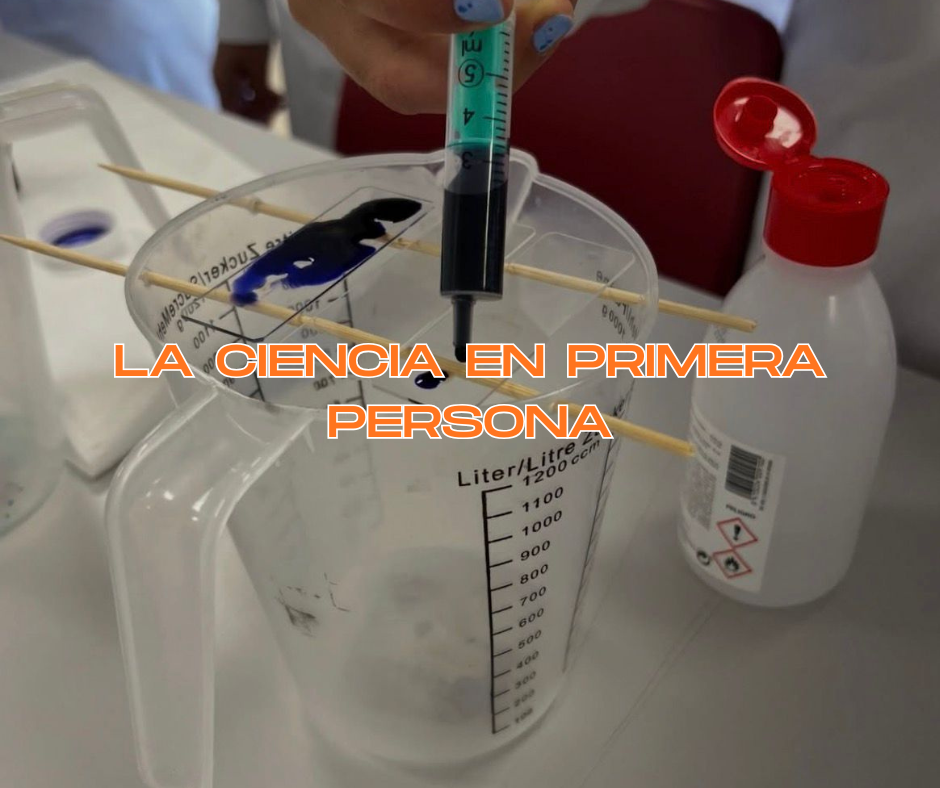
One of the steps performed in the practice was the preparation of a blood smear, a technique used to study the cells present in the blood. This experience allowed students to better understand how samples are prepared for subsequent observation. In a school in Granada, these types of practices help to consolidate scientific learning in a visual and practical way.
Application of Stains in the Laboratory
After preparing the samples, the students applied a stain with dyes, a process necessary to clearly differentiate and observe the various blood cells. This part of the activity allowed them to learn the importance of laboratory techniques in scientific and health studies. In a bilingual school in Granada, this practical learning is especially enriching.
Observation of Erythrocytes and Leukocytes
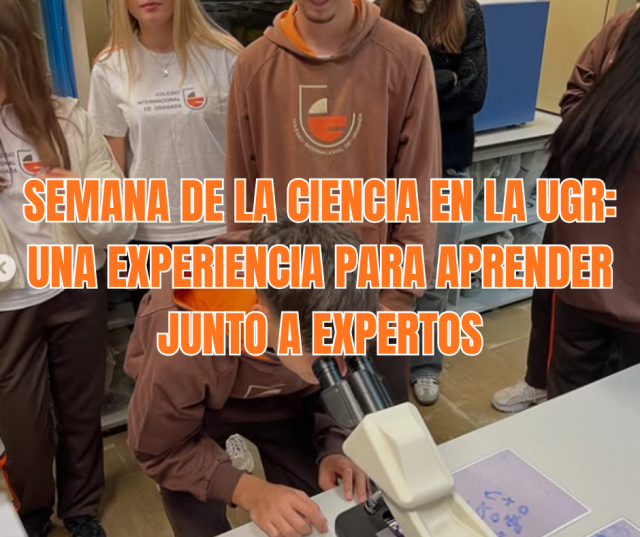
Finally, the students were able to observe erythrocytes and leukocytes under the microscope, seeing with their own eyes the cells previously studied in class. This experience allowed them to better understand the structure and function of blood cells, making the learning much closer and more meaningful within an institute in Granada.
Understanding Science Through Experience
The practice allowed the students to approach science in a direct and participatory way. Seeing under the microscope what they had previously worked on in theory helps reinforce concepts and increases motivation toward scientific learning. In a bilingual institute in Granada, these types of activities are part of a methodology based on experimentation and observation.
Learning Science is also about Experimenting with it
In short, this laboratory activity has been an enriching experience for the students, allowing them to better understand the microscopic world of blood cells. At Colegio Internacional de Granada, the focus is on an education where science is not only studied but also experienced. This approach makes the center a benchmark among schools in Granada that promote practical and meaningful learning.