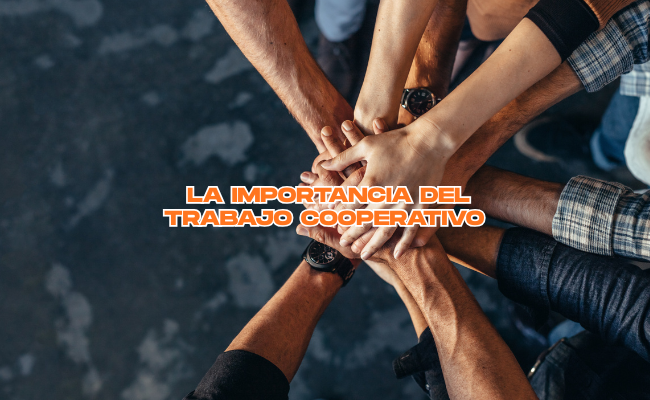
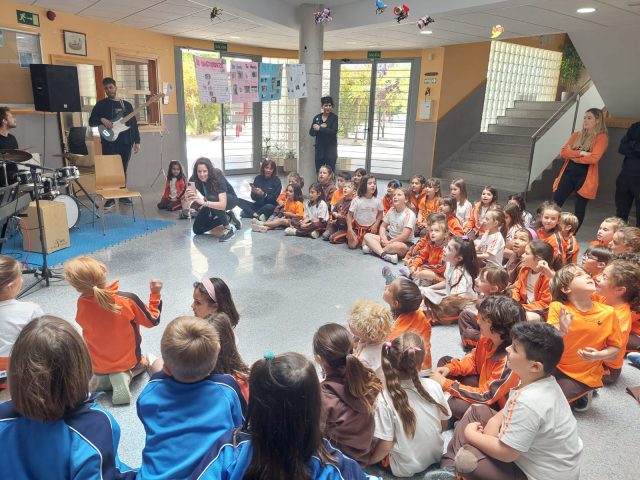
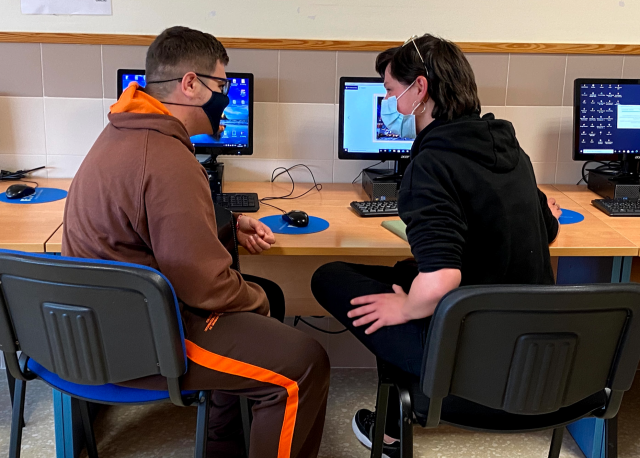
At the Colegio Internacional de Granada, we understand that learning is not merely an individual process, but a shared experience. Cooperative work in the classroom allows students to learn from one another, developing the social, academic, and emotional skills that are fundamental to their personal growth.
Cooperative learning is based on organizing students into small groups where every member plays an active role. This methodology fosters shared responsibility, as the group’s success depends on everyone’s commitment. At our school in Granada, this approach is applied across both Primary and Secondary levels.
Working cooperatively improves the understanding of subject matter, as students must explain, argue, and contrast ideas. This exchange promotes deeper and more lasting learning. At our secondary school in Granada, cooperative work helps consolidate knowledge and develop critical thinking.
Beyond academic content, cooperative work contributes to the development of essential social skills. Learning to listen, respecting turns to speak, and valuing the contributions of others fosters a positive environment within the classroom and strengthens relationships between peers.
In these workgroups, each student takes on specific tasks and learns to manage their time. This dynamic encourages personal autonomy and individual responsibility within a common project—key competencies that are specially reinforced at our bilingual school in Granada.
Cooperative work also teaches students how to manage disagreements and seek solutions through dialogue. These situations allow for the development of empathy, assertive communication, and negotiation skills, which are indispensable for both academic and personal life.
In Primary, cooperative work helps students begin their journey into collaboration and mutual respect. In Secondary, this methodology is consolidated as an effective tool for tackling more complex projects. At our bilingual school in Granada, it is always adapted to the age and maturity of the students.
In this type of learning, the teacher acts as a mentor and facilitator. Their role is to accompany, observe, and help the groups function correctly, promoting a safe and participatory learning environment at our school.
Cooperative work prepares students for real-world contexts where collaboration is essential. Knowing how to work in a team is a key competency for both future studies and the professional world, which is why it holds a prominent place in our educational project.
At our institute in Granada, cooperative work does more than just improve learning; it strengthens the sense of belonging. Learning together helps build a more cohesive educational community where respect and collaboration are shared values.